


Stanford Medicine
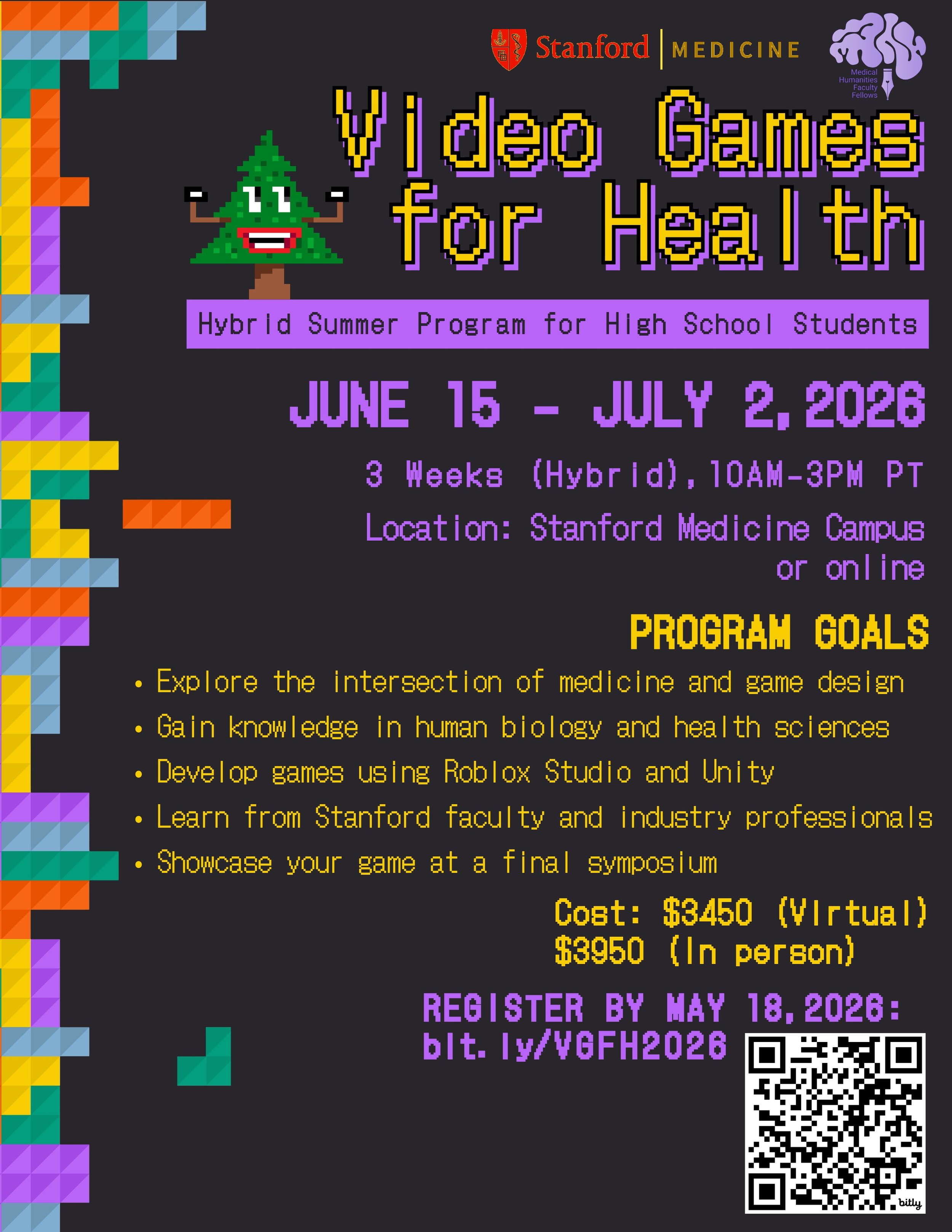
Video Games for Health Hybrid
Summer Program
JUNE 15 - JULY 2, 2026
Embark on a comprehensive program at the forefront of the intersection between medical science and video game design. Throughout this program, you'll delve into essential medical subjects, including cardiovascular physiology, neurophysiology, and mental health.
Our program's primary focus is on the art of game design, encompassing critical aspects such as storytelling, character development, plot construction, and the creation of engaging gameplay. You will have the opportunity to learn from leaders in these fields, including accomplished physicians and creative professionals.
As the program reaches its conclusion, you will be able to showcase your accomplishments at a symposium, presenting your video game design.
No prior experience in health or game design is required, as we encourage a diverse range of participants from various backgrounds, both within the sciences and the arts. By the end of the program, you will have not only created a meaningful game design but also gained a deeper understanding of medical science. This unique program leverages the resources of our institution to help you forge lasting connections within a community of like-minded, dedicated learners.
Registration is now full for 2026.
accepting applications.
Watch the 2026 info session recording.
Passcode: &##1SXQ9


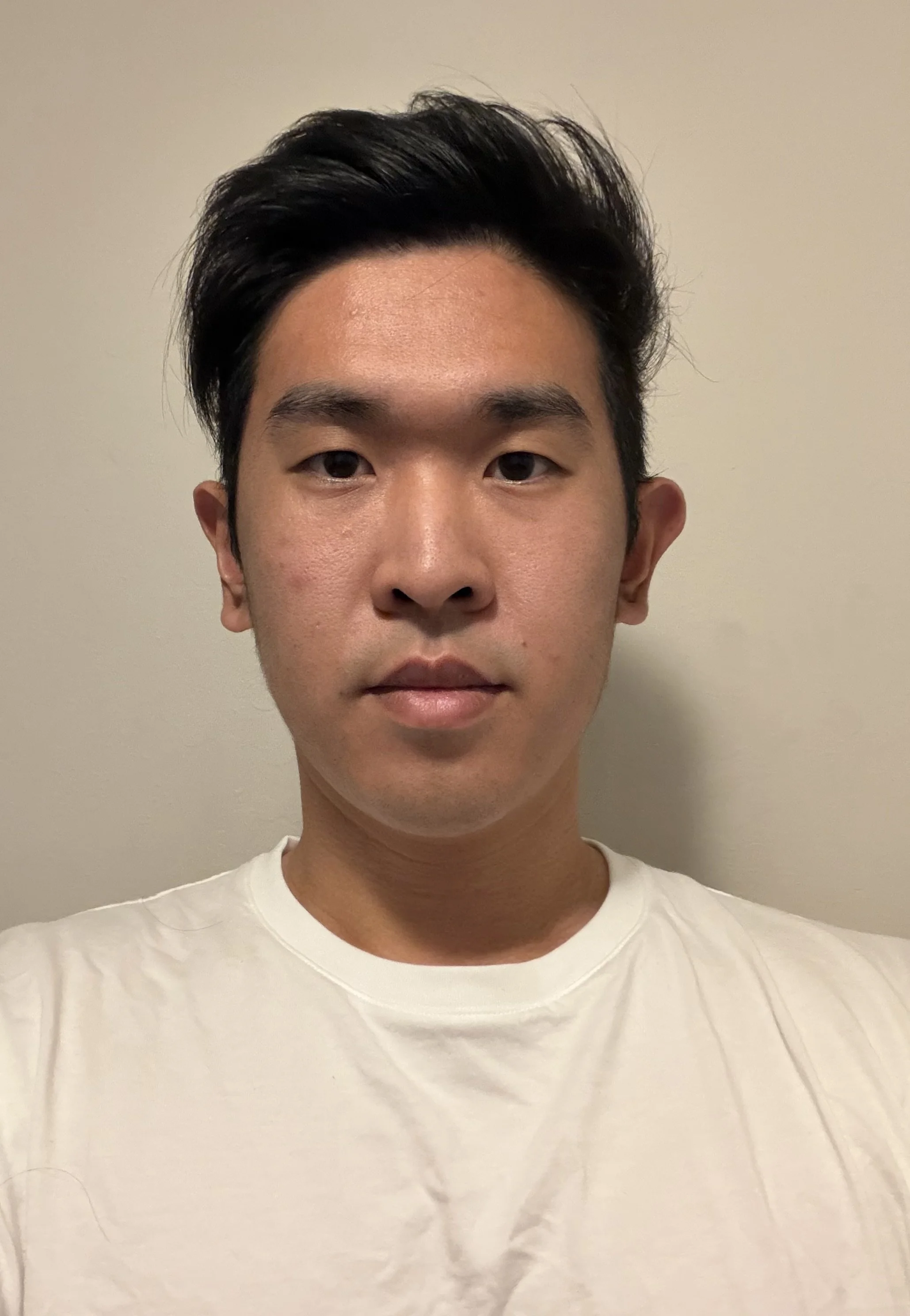
Course Advisor: Bryant Lin, MD, MEng
Bryant Lin, MD, MEng is a primary care physician, educator and researcher. The cornerstone of Dr. Lin's work is keeping medicine focused on humans - patients, providers, families and trainees - and not lost in technology and algorithms. His research and educational interests span (1) Developing and testing novel medical technologies, (2) Improving the health of Asian populations with Precision and Population Health, and (3) Increasing expression and interconnections in the Health Community with the Humanities and Arts. After receiving his undergraduate and master's degrees in Electrical Engineering and Computer Science from MIT, he completed his MD and internal Medicine training at Tufts University School of Medicine and Tufts Medical Center.
Teaching Assistant: Nyah Flores is a recent Neuroscience graduate and student athlete from Colorado College. Her research interests include the intersection of science and the arts, especially as it relates to health. Drawing and painting are her favorite mediums, and she is excited to help with this program and learn about even more art/science applications.
Teaching Assistant: Chris Mei is a software engineer, formerly building big data pipelines at Google and Verily Life Sciences, and studying machine learning at Cornell University. Currently his passions lie in game development, computer graphics, and volleyball. When he is not playing videogames or volleyball, he is dreaming about them.

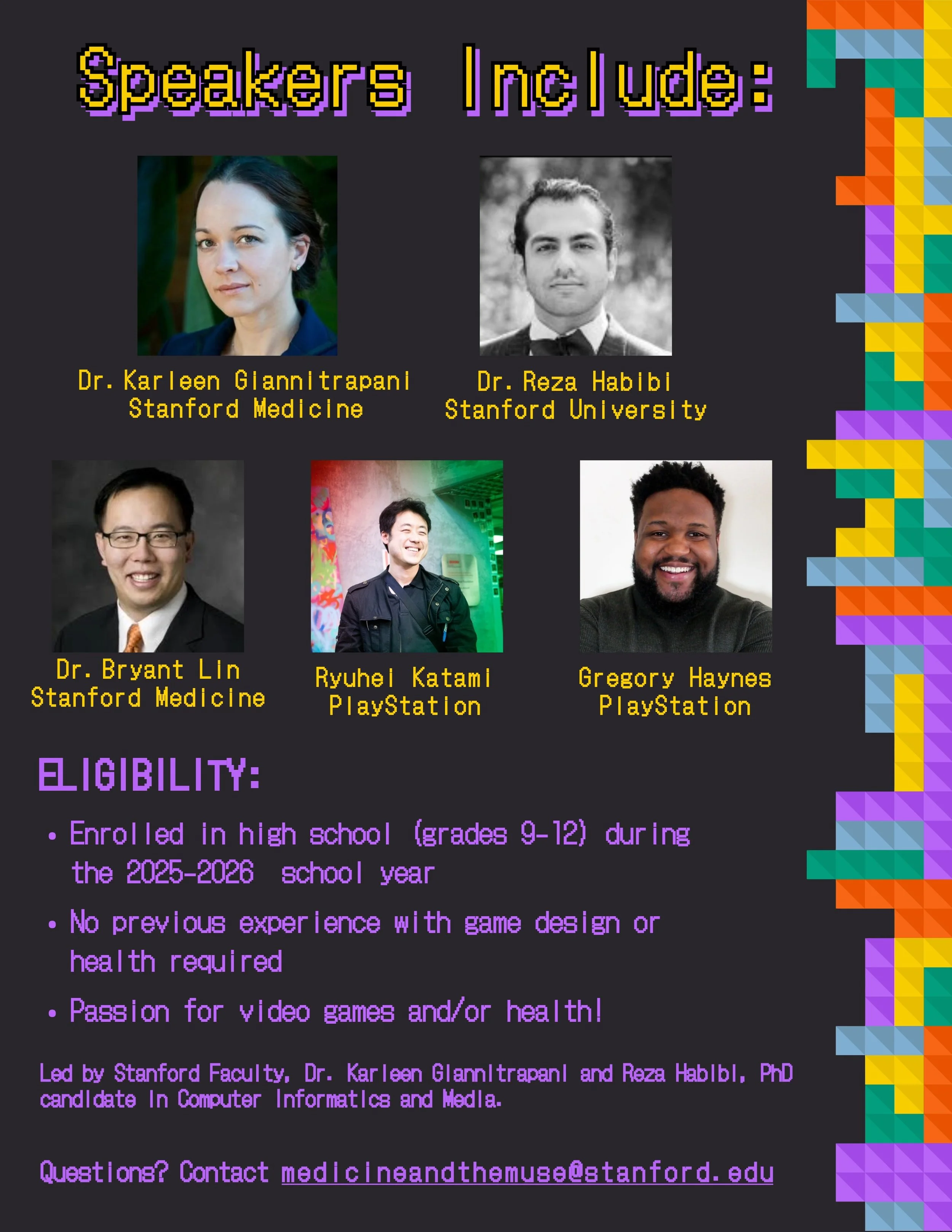
Lead Faculty: Karleen Giannitrapani, PhD, MPH
Karleen Giannitrapani, PhD, MPH is an Assistant Professor in the Division of Primary Care and Population Health at Stanford University School of Medicine and a health services researcher focused on how interdisciplinary healthcare teams collaborate in real-world settings. Her work centers on “dynamic teaming,” the reality that healthcare teams often have changing rosters rather than static, bounded membership, an especially common challenge in complex care. In addition to her role at Stanford, she serves as Quality Lead for the Section of Palliative Medicine and is a Core Investigator at the VA Palo Alto Health Care System’s Center for Innovation to Implementation (Ci2i). She also directs the VA Quality Improvement Resource Center (QuIRC) for Palliative Care, supporting 170 VA facilities nationwide in improving pain and symptom management and strengthening palliative care integration. Dr Giannitrapani has given hundreds of presentations and has over 70 peer-reviewed publications in high-quality medical and health services delivery journals such as Medical Care, JAMA Surgery, the Journal of General Internal Medicine, the Journal of Pain and Symptom Management, and Pain Medicine. She has received a 5-year VA Career Development Award on building better teams across disciplines and was an American Academy of Hospice and Palliative Medicine Research Scholar for related work.

Lead Instructor: Reza Habibi, PhD
Reza Habibi is a researcher and instructor at UC Santa Cruz and Stanford University whose work explores how AI systems can understand, learn from, and collaborate with humans. He is completing his PhD on human-AI collaboration and co-creation, drawing on interpretability, symbolic interaction, and reasoning to make generative AI more accessible and meaningful for learners and educators. His research spans human-centered AI, mixed and augmented reality, and interactive systems, including projects that visualize complex human behavior models, use AI and immersive technologies for learning, and support resilience among first-year students through participatory design. Alongside his academic work, he teaches courses in Human-Centered AI at UC Santa Cruz and Stanford, as well as Interactive Game Design, Mixed Reality, and Generative AI at Stanford. Reza is also involved in motorsports as both a driver and engineer for years.